
Signal Operating Instructions: A Comprehensive Plan
This detailed plan encompasses vital communication protocols‚ encompassing radio nets‚ frequencies‚ and call signs‚ alongside telephone codes and prearranged message systems․
Crucially‚ it details converter setups‚ map coordinate usage‚ authentication procedures‚ and diverse signal types – visual‚ pyrotechnic‚ smoke‚ and aircraft signals․
Signal Operating Instructions (SOI) are fundamental to effective military and organizational communication‚ providing a standardized framework for transmitting and receiving information․ These instructions‚ as evidenced by historical documents from the 84th Infantry Division in 1943‚ detail critical elements like radio nets‚ assigned frequencies‚ and unique call signs‚ ensuring clarity and security during operations․
Modern SOIs extend beyond traditional radiotelegraph and radiotelephone methods to encompass radio teletypewriter systems and prearranged message codes․ They are designed to mitigate ambiguity and potential misinterpretation‚ particularly vital in high-stress environments․ Furthermore‚ these instructions cover equipment-specific procedures‚ such as the setup and maintenance of systems like the Horizon SQ3 Portable Traffic Signal System‚ emphasizing both operational efficiency and safety․
Understanding and adhering to SOI is paramount for all operators‚ fostering seamless communication and contributing directly to mission success․
Historical Context of Signal Instructions (WWII Example)
Documents from the 84th Infantry Division‚ dated February 1st‚ 1943‚ vividly illustrate the critical role of Signal Operating Instructions during World War II․ These instructions weren’t merely suggestions; they were essential for coordinating movements and maintaining command control amidst the chaos of combat․ The digitized records detail specific frequencies‚ call signs assigned to individual units‚ and even telephone code names and numbers – a necessity for secure communication․
The WWII-era SOI also encompassed detailed procedures for utilizing equipment like the Converter M-209-A‚ outlining precise pin and lug setups‚ and key wheel adjustments․ Beyond equipment‚ codes for map coordinates‚ message authentication‚ and visual/pyrotechnic signals were standardized to prevent friendly fire and ensure accurate information dissemination․
This historical example underscores the enduring importance of clear‚ concise‚ and universally understood communication protocols in military operations․
Modern Signal Operating Instructions Overview
Contemporary Signal Operating Instructions (SOI) represent a significant evolution from their WWII predecessors‚ yet retain the core principle of standardized communication․ Today’s SOI encompass a broader range of technologies‚ including advanced radio systems‚ digital networks‚ and satellite communications‚ demanding comprehensive documentation․
Modern instructions extend beyond basic frequencies and call signs to include detailed protocols for equipment like the Horizon SQ3 Portable Traffic Signal System‚ covering programming‚ monitoring‚ maintenance‚ setup‚ and removal procedures․ Emphasis is placed on interoperability‚ ensuring seamless communication between different units and agencies․
Furthermore‚ current SOI prioritize cybersecurity‚ incorporating robust message authentication codes and procedures to protect against interception and manipulation․ The focus remains on clarity‚ accuracy‚ and security‚ vital for effective operations․
Communication Methods & Codes
Diverse methods—radiotelegraph‚ radiotelephone‚ and teletypewriter—along with prearranged codes‚ authentication‚ and telephone protocols‚ ensure secure and effective signal transmission․

Radiotelegraph (International Morse Code)
Radiotelegraph communication‚ utilizing International Morse Code‚ remains a foundational element within signal operating instructions‚ despite advancements in technology․ Proficiency in Morse Code allows for reliable communication even when voice or digital systems are compromised or unavailable‚ offering a crucial backup capability․
Operators must be thoroughly trained in both sending and receiving Morse Code‚ understanding the nuances of timing‚ spacing‚ and character recognition․ Accurate transmission and interpretation are paramount to avoid miscommunication and potential operational errors․ Regular practice and drills are essential to maintain proficiency․
Effective radiotelegraph operation also requires a solid understanding of radio frequencies‚ antenna theory‚ and propagation characteristics․ Operators should be familiar with procedures for establishing and maintaining radio contacts‚ including call sign protocols and message formatting․ Furthermore‚ knowledge of signal security measures‚ such as code groups and encryption techniques‚ is vital for protecting sensitive information․
Radiotelephone (Voice Communication)
Radiotelephone‚ or voice communication‚ constitutes a primary method within signal operating instructions‚ demanding clarity and precision from all operators․ Effective voice procedures are critical for transmitting information quickly and accurately‚ especially during time-sensitive operations․ Operators must maintain a calm and professional demeanor‚ speaking clearly and using standardized phraseology․
Proper microphone technique‚ including appropriate volume and modulation‚ is essential for ensuring intelligibility․ Avoiding slang‚ jargon‚ and ambiguous language minimizes the risk of misinterpretation․ Operators should also be proficient in phonetic alphabet usage for spelling out critical information‚ such as call signs or proper names․
Understanding radio propagation and antenna characteristics is vital for maximizing communication range and minimizing interference․ Regular voice checks and signal reports help maintain situational awareness and ensure reliable connectivity․ Security protocols‚ such as voice encryption‚ should be employed when transmitting sensitive information․
Radio Teletypewriter Communications
Radio Teletypewriter (RTTY) communications represent a robust and reliable method detailed within signal operating instructions‚ particularly valuable for transmitting lengthy messages or data․ Unlike voice communication‚ RTTY offers a permanent record of transmissions‚ enhancing accountability and reducing ambiguity․ Operators require specialized training in operating and maintaining RTTY equipment‚ including proper tuning and alignment․
Standardized RTTY procedures dictate specific character sets‚ timing protocols‚ and error-correction techniques․ Accurate typing skills and attention to detail are paramount‚ as errors can significantly impact message integrity․ RTTY is less susceptible to voice interference‚ making it ideal for challenging communication environments․
Security considerations for RTTY include employing encryption techniques to protect sensitive information․ Regular testing and maintenance of RTTY equipment are crucial for ensuring optimal performance and reliability․ Proficiency in RTTY operation expands an operator’s communication toolkit․
Prearranged Message Codes
Prearranged message codes‚ a cornerstone of efficient signal operating instructions‚ significantly expedite communication by replacing lengthy phrases with concise code groups․ These codes‚ meticulously documented and distributed to authorized personnel‚ minimize transmission time and reduce the risk of interception; Their use demands strict adherence to established protocols to prevent misinterpretation․
Effective implementation requires operators to memorize frequently used codes and maintain readily accessible codebooks for less common messages․ Security is paramount; codebooks must be protected from unauthorized access and regularly updated to maintain confidentiality․ Proper code selection is vital‚ ensuring the chosen code accurately reflects the intended message․
Regular training exercises reinforce operator proficiency in encoding and decoding messages‚ enhancing speed and accuracy․ Utilizing prearranged codes streamlines operations and conserves valuable transmission bandwidth․
Message Authentication Codes
Message Authentication Codes (MACs) are integral to secure signal operating instructions‚ verifying both the origin and integrity of transmitted information․ Employing cryptographic algorithms‚ MACs generate a unique tag appended to each message‚ detectable only with a shared secret key․ This ensures that only the intended recipient can confirm the message’s authenticity and detect any alterations during transit․
The 84th Infantry Division’s documentation highlights the importance of MACs‚ particularly with the Converter M-209-A‚ safeguarding against enemy interception and manipulation․ Proper key management is crucial; compromised keys render the MAC ineffective․ Operators must adhere to strict protocols for key distribution and storage․
Regular audits and key rotation further enhance security․ Implementing robust MAC procedures is paramount for maintaining reliable and trustworthy communication channels․
Telephone Code Names & Numbers
Telephone code names and numbers formed a critical layer within signal operating instructions‚ providing a discreet and efficient means of communication․ The 84th Infantry Division’s records demonstrate a comprehensive system assigning unique identifiers to individuals and units‚ masking sensitive information from potential adversaries․
These codes weren’t merely arbitrary; they often related to roles‚ locations‚ or operational functions‚ aiding recall and minimizing transmission errors․ Maintaining a current and secure directory was paramount‚ with strict protocols governing access and updates․ Regular changes to code names were implemented to counter enemy codebreaking efforts․
Effective use demanded operator familiarity and adherence to established procedures‚ ensuring rapid and reliable contact while preserving operational security․

Equipment Specific Instructions
Detailed guidance covers the Converter M-209-A’s pin/lug and key wheel setups‚ alongside the Horizon SQ3 system’s programming‚ monitoring‚ maintenance‚ and deployment procedures․
Converter M-209-A: Pin & Lug Set-Up
The Converter M-209-A’s operational effectiveness hinges on the precise configuration of its pin and lug settings‚ directly impacting signal encryption and decryption capabilities․ This setup dictates the specific scrambling algorithm applied to outgoing messages and the corresponding unscrambling process for incoming transmissions․ Operators must meticulously follow established procedures to ensure secure communication․
Incorrect pin and lug configurations can lead to garbled messages‚ compromised security‚ or complete communication failure․ The process involves carefully inserting pins into designated slots on the converter‚ corresponding to pre-determined key schedules distributed via secure channels․ Lug positions further refine the encryption process‚ adding another layer of complexity․ Regular checks and adherence to updated key schedules are paramount;
Proper documentation of pin and lug settings is crucial for troubleshooting and maintaining operational readiness․ Any deviation from established protocols must be reported immediately to the appropriate authority․ This meticulous attention to detail safeguards sensitive information and ensures reliable communication within the unit․
Converter M-209-A: Key Wheel & Drum Bar Set-Ups
Beyond the pin and lug configurations‚ the Converter M-209-A’s key wheel and drum bar settings represent a critical layer of encryption‚ demanding precise operator attention․ These components introduce dynamic elements to the scrambling process‚ significantly enhancing message security against interception and decryption by unauthorized parties․ Accurate setup is non-negotiable for maintaining communication integrity․
The key wheel‚ rotated according to daily or mission-specific schedules‚ alters the substitution cipher used for encoding messages․ Simultaneously‚ the drum bar settings modify the permutation of characters‚ further obfuscating the original text․ Operators must receive and meticulously implement updated key schedules via secure channels‚ documenting all changes․
Regular calibration and verification of both the key wheel and drum bar mechanisms are essential to prevent errors․ Any malfunction or discrepancy must be reported immediately․ Maintaining these settings correctly ensures the confidentiality of transmitted information and the effectiveness of the overall communication system․
Horizon SQ3 Portable Traffic Signal System: Programming
The Horizon SQ3’s programming interface allows for comprehensive customization of traffic flow management‚ encompassing cycle lengths‚ phase durations‚ and offset timings․ Operators can define specific operational modes to accommodate varying traffic volumes and road conditions‚ optimizing signal efficiency and minimizing congestion․ Detailed understanding of traffic engineering principles is crucial for effective programming․
Programming includes configuring preemption settings for emergency vehicles and priority access routes‚ ensuring rapid response capabilities․ Integration with external sensors – traffic counters‚ video cameras – enables adaptive signal control‚ dynamically adjusting timings based on real-time conditions․ Thorough documentation of all programming changes is mandatory․
The system’s manual provides step-by-step instructions for navigating the programming menus and utilizing advanced features․ Regular software updates are vital to maintain functionality and security․ Proper programming directly impacts public safety and traffic flow‚ demanding precision and adherence to established protocols․
Horizon SQ3 Portable Traffic Signal System: Monitoring
Continuous monitoring of the Horizon SQ3 system is paramount for ensuring reliable operation and swift response to any anomalies․ Operators must regularly check system status displays for error messages‚ communication failures‚ or sensor malfunctions․ Real-time data on traffic flow‚ phase progression‚ and wait times provides valuable insights into system performance․
Remote monitoring capabilities allow for off-site oversight‚ enabling proactive identification and resolution of issues․ Detailed logging of all system events facilitates troubleshooting and post-incident analysis․ Regular checks of power supply‚ battery levels‚ and communication links are essential preventative measures․
The system’s interface provides visual representations of signal timing‚ traffic counts‚ and sensor data․ Prompt notification of any deviations from programmed parameters is crucial for maintaining optimal traffic control․ Effective monitoring safeguards public safety and minimizes traffic disruptions․
Horizon SQ3 Portable Traffic Signal System: Maintenance
Regular preventative maintenance is critical for the longevity and reliable performance of the Horizon SQ3 system․ This includes routine inspections of all components – cabinets‚ signals‚ sensors‚ and communication equipment – for physical damage or wear․ Cleaning of lenses‚ connectors‚ and housings prevents signal degradation and ensures optimal visibility․
Battery checks and replacements are essential‚ particularly for portable units‚ to guarantee uninterrupted operation․ Firmware updates should be applied promptly to benefit from bug fixes and performance enhancements․ Thorough documentation of all maintenance activities is vital for tracking system history and identifying recurring issues․
Adherence to the manufacturer’s recommended maintenance schedule minimizes downtime and extends the system’s lifespan․ Proper storage of equipment when not in use protects against environmental factors and potential damage․

Horizon SQ3 Portable Traffic Signal System: Setup & Removal
Proper setup of the Horizon SQ3 system demands careful site assessment‚ ensuring adequate visibility and minimal obstruction․ Securely position cabinets and signals‚ utilizing appropriate anchoring methods to withstand environmental conditions․ Establish reliable communication links‚ verifying functionality before activating the system․
Thoroughly test all signal heads‚ sensors‚ and preemption features to confirm correct operation․ Document the setup configuration‚ including signal timing plans and communication parameters․ Removal procedures require reversing the setup process‚ carefully disconnecting all components and securing them for transport․
Inspect equipment for damage during removal and address any issues promptly․ Proper storage and inventory management are crucial for maintaining system readiness․

Signal Codes & Identification
This section details crucial codes – map coordinates‚ aircraft signals‚ visual cues‚ pyrotechnics‚ smoke signals‚ and identification panels – for clear communication․
Map Coordinate Code
The precise transmission of location data relies heavily on a standardized map coordinate code‚ ensuring all units operate from the same geographical understanding․ This system‚ vital for directing movements‚ reporting positions‚ and targeting operations‚ demands absolute accuracy and clarity during communication․ Operators must be thoroughly trained in both reading and transmitting coordinates‚ utilizing established conventions to avoid ambiguity․
Coordinate formats typically involve latitude and longitude‚ or grid references based on a pre-defined map system․ Proper formatting includes specifying the degree symbol‚ minutes‚ and seconds‚ or utilizing a grid zone designation followed by numerical coordinates․ Errors in transmission‚ even minor ones‚ can lead to significant miscalculations and potentially disastrous consequences․ Therefore‚ verification procedures‚ such as read-back confirmation‚ are essential components of any coordinate transmission․
Furthermore‚ understanding datum and projection differences is critical when exchanging coordinates between different sources․ Consistent application of the designated coordinate system is paramount for maintaining operational effectiveness and preventing friendly fire incidents․
Aircraft Signals
Effective communication with aircraft necessitates a distinct set of signals‚ encompassing both visual and radio-based methods‚ tailored to the unique challenges of aerial operations․ These signals facilitate coordination‚ convey critical information‚ and ensure flight safety․ Standardized procedures are paramount‚ minimizing the risk of misinterpretation during high-speed‚ dynamic scenarios․
Visual signals include the use of flares‚ smoke trails‚ and ground-to-air panels displaying pre-defined messages․ Radio signals utilize specific frequencies and call signs‚ adhering to established protocols for brevity and clarity․ Aircraft may also employ standardized light signals‚ such as wing wags or flashing lights‚ to communicate basic intentions․
Operators must be proficient in recognizing and responding to these signals‚ understanding their implications‚ and relaying information accurately․ Contingency procedures should address signal failures or compromised communications‚ ensuring alternative methods are available to maintain situational awareness and operational control․
Visual Signals
Visual signals represent a fundamental component of signal operating instructions‚ providing a means of communication independent of electronic devices‚ crucial during equipment failure or radio silence․ These signals rely on pre-arranged codes utilizing flags‚ panels‚ lights‚ and even body language‚ demanding clear understanding and precise execution by all personnel․

Identification panels‚ displaying specific codes or symbols‚ allow for rapid identification of friendly forces and relaying essential information․ Hand and arm signals‚ standardized for clarity‚ facilitate close-range communication within units․ The effective use of these signals requires rigorous training and consistent practice to ensure accurate interpretation․
Operators must be adept at both transmitting and receiving visual signals‚ accounting for visibility conditions and potential obstructions․ Maintaining situational awareness and adhering to established protocols are paramount for successful implementation and preventing miscommunication in critical operational environments;
PyroTechnic Codes
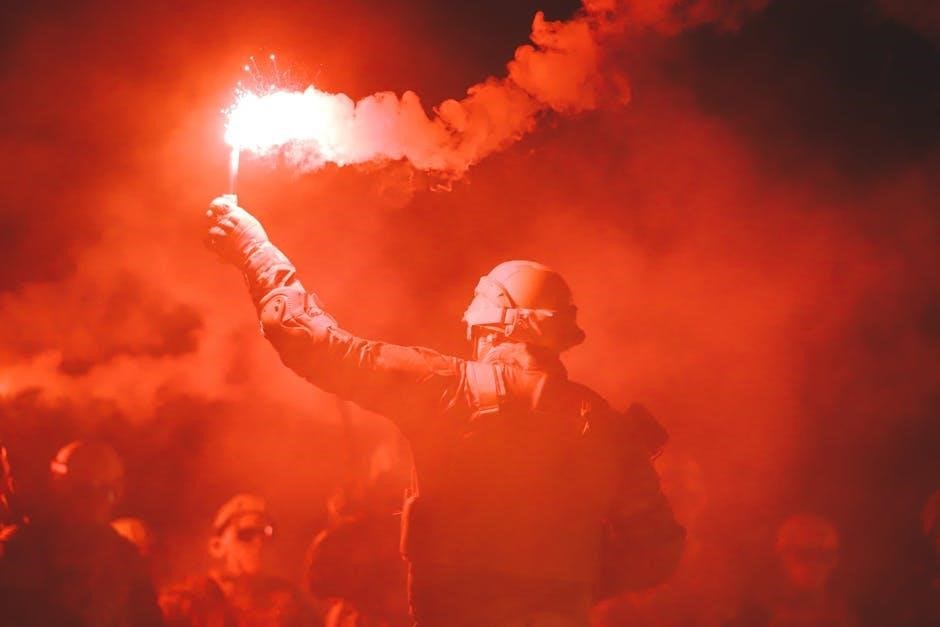
PyroTechnic codes‚ utilizing flares and smoke signals‚ offer a vital means of communication‚ particularly during limited visibility or when other methods are compromised․ These signals‚ while effective‚ demand strict adherence to safety protocols and a thorough understanding of their designated meanings within signal operating instructions․
Different colored flares represent distinct messages – distress‚ location requests‚ or enemy contact – requiring precise identification and interpretation․ Smoke signals‚ similarly‚ employ varying colors and patterns to convey specific information‚ necessitating clear visibility and a pre-defined codebook for accurate decoding․
Operators must be trained in the safe handling‚ deployment‚ and recognition of pyroTechnic signals‚ considering wind conditions and potential fire hazards․ Proper storage and maintenance of these devices are crucial for reliability‚ ensuring they function as intended when needed most in dynamic operational scenarios․
Smoke Signal Code
Smoke signal code represents a historically significant‚ yet still relevant‚ method of visual communication‚ particularly valuable when radio silence is required or equipment fails․ Effective implementation hinges on a pre-established understanding of signal patterns – color‚ density‚ and duration – detailed within comprehensive signal operating instructions․
Different colored smoke plumes convey distinct messages; for example‚ a white smoke burst might indicate a safe zone‚ while black smoke could signal enemy presence․ Variations in puff frequency and length further refine the message‚ demanding precise observation and interpretation by trained personnel․
Successful smoke signal transmission relies on favorable weather conditions‚ minimizing wind interference and maximizing visibility․ Operators must also consider background terrain to ensure the signal stands out‚ adhering to established protocols for optimal clarity and preventing miscommunication in critical situations․
Identification Panel Code
Identification panels serve as a crucial element within signal operating instructions‚ providing a readily deployable means of visual identification for friendly forces‚ particularly in scenarios demanding discreet communication․ These panels‚ often utilizing brightly colored fabrics or reflective materials‚ display pre-determined codes representing unit designations‚ locations‚ or operational status․
Effective use necessitates strict adherence to a codified system‚ ensuring all personnel recognize and correctly interpret the displayed signals․ Panels can be arranged to form specific geometric shapes or letter combinations‚ each carrying a unique meaning understood throughout the operational area․
Proper panel deployment requires consideration of visibility‚ background contrast‚ and potential enemy observation․ Regular drills and training are essential to maintain proficiency in both panel construction and signal interpretation‚ minimizing the risk of friendly fire or compromised operations․
Operational Procedures & Approvals
Rigorous procedures govern signal operation‚ demanding operational and design approvals‚ alongside a structured design initiation process for effective communication deployment․
Signal Operation and Operational Approval
Successful signal operations necessitate a formalized approval process‚ ensuring adherence to established communication protocols and security measures․ This begins with a thorough understanding of the Signal Operating Instructions (SOI)‚ which detail acceptable procedures for all communication methods․
Operational approval confirms that proposed signal activities align with the unit’s mission and do not interfere with other critical communications․ Before implementation‚ operators must demonstrate proficiency in utilizing radiotelegraph‚ radiotelephone‚ and radio teletypewriter systems․

Furthermore‚ adherence to prearranged message codes‚ authentication protocols‚ and proper equipment setup – like the Converter M-209-A – is paramount․ Documentation of all operational plans and subsequent approvals is crucial for accountability and future reference‚ maintaining a clear audit trail of communication activities․
Design Approval Process
The design approval process for signal operations is a multi-stage review‚ ensuring all communication plans are secure‚ effective‚ and compliant with established standards․ Initiating this process requires a detailed proposal outlining the intended communication method – radiotelegraph‚ radiotelephone‚ or teletypewriter – and its purpose․
This proposal must specify frequencies‚ call signs‚ and any prearranged message codes to be utilized‚ alongside a security assessment detailing authentication procedures․ Crucially‚ the design must account for potential interference and incorporate contingency plans․
Approval requires review by designated signal personnel‚ confirming alignment with operational needs and adherence to SOI guidelines․ Documentation of the design‚ review comments‚ and final approval is essential for maintaining a comprehensive record of all communication plans․
Starting the Design Process
Initiating the signal design process demands a clear understanding of the communication objective․ Define the message’s purpose‚ intended recipient‚ and required security level․ This foundational step dictates the appropriate communication method – whether radiotelegraph for secure‚ long-distance transmission‚ radiotelephone for immediate voice contact‚ or teletypewriter for detailed reports․
Next‚ identify available frequencies and assign unique call signs‚ referencing established signal operating instructions (SOI); Consider potential interference and select frequencies accordingly․ Develop a preliminary message format‚ incorporating prearranged codes where applicable to enhance speed and clarity․
Finally‚ outline authentication procedures to verify message integrity and prevent unauthorized access․ Thorough planning at this stage minimizes errors and ensures effective communication․
Improving Communication Skills as Operators
Effective operation hinges on mastering signal operating instructions (SOI) and communication techniques․ Operators must become proficient in radiotelegraph (Morse code) sending and receiving‚ maintaining speed and accuracy․ Radiotelephone skills require clear articulation‚ concise messaging‚ and adherence to proper protocol․ Familiarity with radio teletypewriter systems is also crucial for detailed report transmission․
Regular practice with prearranged codes and message authentication procedures enhances efficiency and security․ Active listening‚ accurate message logging‚ and prompt error correction are vital․
Continuous learning‚ coupled with a commitment to clear‚ concise communication‚ elevates operator performance and ensures reliable information exchange․